


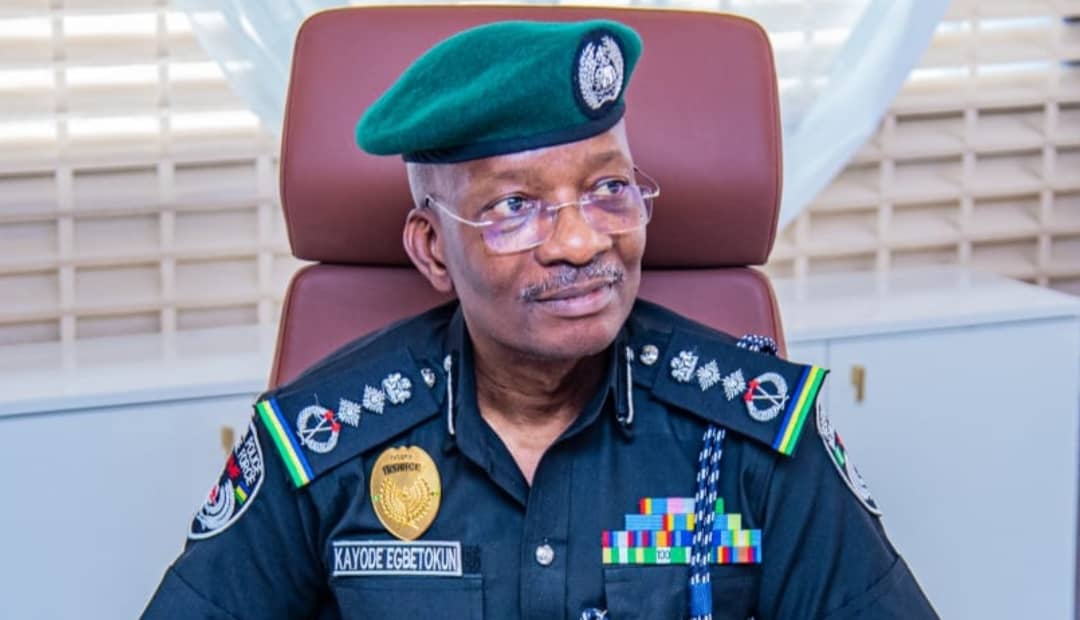
 The Inspector-General of Police ( IGP) kayode Egbetokun has disclosed that over 12,000 Nigeria Police officers have participated in peacekeeping operations worldwide since the year 1960.
Egbetokun spoke yesterday in Lagos at a conference organised by the Nigerian Institute of International Affairs (NIIA) to commemorate 60 years of Nigeria’s participation in international peacekeeping missions, amid growing concerns over domestic security challenges.
The IGP, alongside the Director-General of NIIA, Prof. Eghosa Osaghae and former presidential candidate of the Social Democratic Party (SDP), Prince Adewole Adebayo, agreed that effective policing at home remains the foundation for Nigeria’s relevance and effectiveness in global security engagements.
According to Egbetokun, Nigeria’s performance in international peace operations is a mirror of the professionalism, discipline and accountability of its police force within the country, stressing that foreign deployments cannot substitute for strong domestic institutions.
“Effective peacekeeping policing reflects legitimacy, discipline and public trust, both at home and abroad,” the IGP said. “Nigeria’s credibility in global security cooperation depends on sustained police reform and respect for human rights.”
Tracing Nigeria’s peacekeeping journey to 1960, shortly after independence, Egbetokun noted that Nigerian police officers have served under the United Nations, African Union and ECOWAS in Africa, Europe, Asia, the Middle East and the Caribbean.
He disclosed that over 12,000 Nigeria Police officers have participated in peacekeeping operations worldwide, adding that modern peacekeeping now places police officers at the centre of civilian protection, election security, community policing and post-conflict stabilisation.
“These roles require professionalism and adaptability, especially in the face of emerging threats such as violent extremism and transnational crime,” he said.
According to him, peace goes beyond the absence of conflict, it involves the deliberate creation of conditions that promote human dignity, democratic governance, justice, and sustainable development.
“Nigeria’s involvement in peace operations reflected its long-standing commitment to multilateralism, international solidarity, and responsible global leadership, ” he said.
“Since 1960, the NPF has remained actively engaged in peace operations under the United Nations, African Union, and ECOWAS.
“The deployment of Nigeria’s first Formed Police Unit in 2004 marked a major shift from observer roles to robust, mandate-driven policing, enabling the country to meet the evolving demands of modern peacekeeping, particularly in public order management, protection of civilians, and stabilisation operations, ” he said
The police boss identified key areas of Nigeria Police contributions to peace missions to include protection of civilians and community security, capacity building for host-state police services, electoral and democratic security, specialised policing functions, and leadership within global policing architecture.
Egbetokun also highlighted emerging challenges facing peace operations, such as violent extremism, transnational organised crime, cyber threats, logistical constraints, and the welfare and mental health of deployed personnel.
To address these challenges, he said the NPF was focusing on specialised training in counterterrorism, cybercrime investigation, intelligence-led policing, institutional modernisation, regional security integration, and domestic police reforms anchored on professionalism, accountability, and respect for human rights.
He assured that Nigeria would not retreat from its international responsibilities, stressing that the NPF would continue to work with global partners, guided by law, ethics, and respect for human dignity, to promote peace and security for present and future generations.
Corroborating the IGP’s position, NIIA Director-General, Prof. Eghosa Osaghae, said Nigeria’s peacekeeping challenges are largely domestic and rooted in internal policing capacity.
“What the police is doing outside is a reflection of its abilities and capacities within,” Osaghae said, adding that despite existing challenges, the Nigeria Police Force has made significant progress in skills acquisition and operational capacity over the last two decades.
“If you compare the Nigeria Police Force today to what it was twenty years ago, you will say we have come a long way,” he said.
Osaghae also revealed plans by the NIIA to collaborate with police leadership to establish an International Centre for Peacekeeping and Policing, aimed at strengthening research, training and institutional memory in line with global best practices.
On his part, leader of the SDP, Adewole Adebayo said the long-standing debate over federal, state or local policing often ignores the real problem of governance, rule of law and police welfare.
“The Nigerian people don’t care whether the police is federal, state or local. What they want is safety and security,” Adebayo said.
He argued that police officers operate within laws and policies crafted by political leaders, noting that failures in policing ultimately reflect failures in leadership.
“The police do not write the law or policies. It is political leaders who must create a good society,” he said.


