


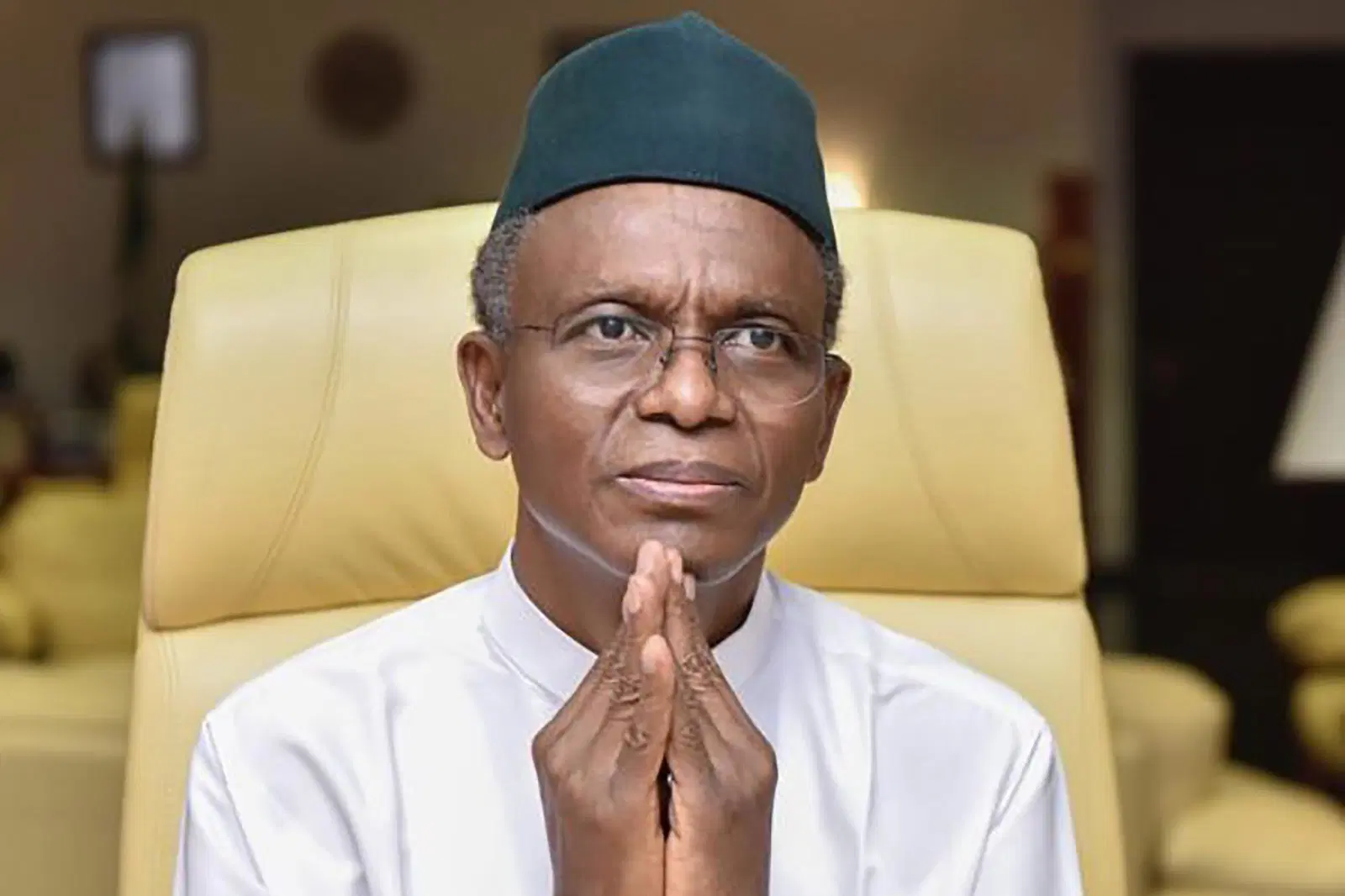
The Federal Government, through the Department of State Services (DSS), has arraigned the immediate past Governor of Kaduna State, Nasir El-Rufai, before the Federal High Court in Abuja over his alleged unlawful interception of the phone communications of the National Security Adviser (NSA), Nuhu Ribadu.
El-Rufai, who is also a former Minister of the Federal Capital Territory (FCT) under former President Olusegun Obasanjo’s administration, was docked on an amended five-count charge marked FHC/ABJ/99/2026, to which he pleaded not guilty before Justice Joyce Abdulmalik.
When the case was called, the prosecution counsel, Oluwole Aladedoye (SAN), informed the court that the matter was fixed for the defendant to take his plea. Aladedoye, however, told the court that a further amended five-count charge was filed on April 13 and prayed the court to substitute it with the earlier three-count charge.
“My Lord, we pray that the earlier charge be struck out,” Aladedoye said.
The former charge was accordingly struck out by the court after counsel to El-Rufai, Oluwole Iyamu (SAN), confirmed service of the amended charge and stated that he did not oppose the striking out of the previous charge.
Following his not guilty plea, prosecution counsel, Mr. Oluwole Aladedoye, SAN, asked the court for three consecutive trial dates.
However, the defence counsel objected to this request on the grounds that the defendant had been in the custody of the Independent Corrupt Practices and Other Related Offences Commission (ICPC) since his arrest, and access to him within the three days of the trial might be difficult.
While stating that the three days might not be in their best interest, Iyamu also drew the attention of the court to the bail application of his client, filed on February 17.
However, the further affidavit in support of the bail application was not in the court file, and the judge stood down the matter for Iyamu to do the needful.
When the matter resumed, the prosecution, which did not oppose the bail application, moved an application seeking an order to conceal the identities of two witnesses expected to testify against El-Rufai.
According to the prosecution, the identities of the witnesses should not appear in public court records and that pseudonyms should be used during the trial.
He based the request on the grounds that the witnesses’ families could be vulnerable to attack from persons sympathetic to El-Rufai.
While opposing the request for concealing the witnesses’ identities, the defence argued that it is the constitutional right of an accused person to know his accusers.
The defence counsel further submitted that there was no evidence before the court showing that El-Rufai had any cult-like followership or posed a threat.
He also stated that the defendant had dedicated his life to public service and warned that granting a blanket anonymity order could create serious prejudice against the accused.
Iyamu also applied for an order directing the prosecution to furnish the defence with proof of evidence to prepare for trial.
Responding, the prosecution submitted that the materials sought by the defence were documents unrelated to the filed processes.
Meanwhile, the case has been adjourned to May 18, 19, and 20 for hearing on all applications before the court.
In the charge signed by a team of five prosecutors from the Department of State Services (DSS), led by M. E. Ernest, the DSS alleged that the defendant committed the crime with some individuals who are currently on the run.
It further alleged that the defendant admitted on February 13, when he appeared as a guest on Arise TV’s Prime Time programme in Abuja, that he acted in concert with others to unlawfully intercept the phone communications of the NSA, thereby committing an offence contrary to and punishable under Section 12(1) of the Cybercrimes (Prohibition, Prevention, etc.) (Amendment) Act, 2024.


